
The True Environmental and Financial Cost of Smart Home Batteries
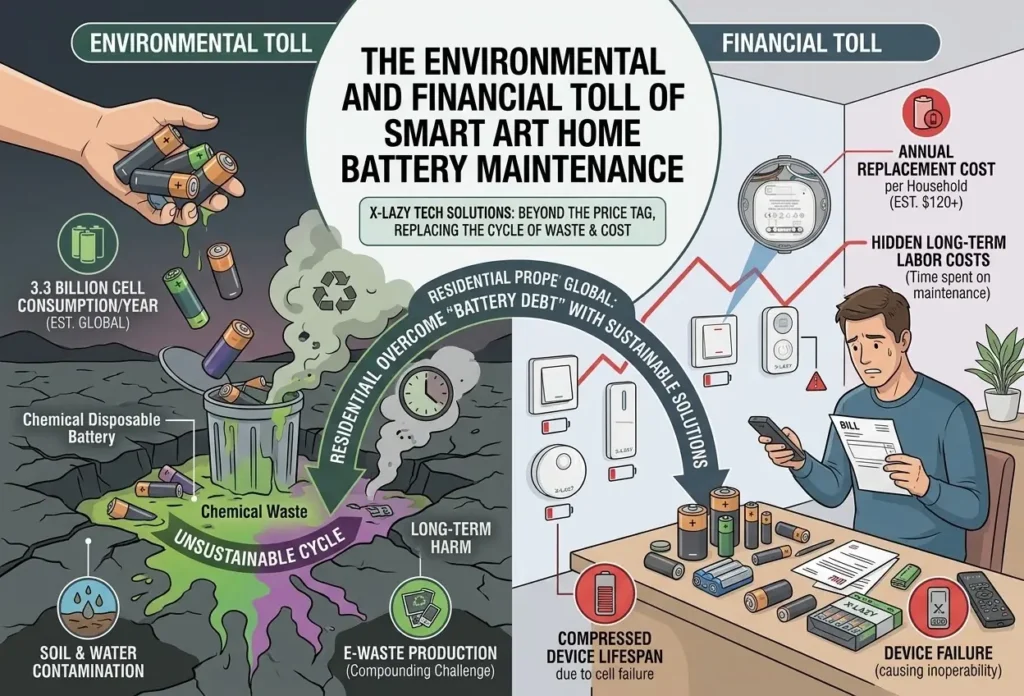
The Environmental and Financial Toll of Smart Home Battery Maintenance
Beyond the price tag of replacement cells lies an unsustainable cycle of chemical waste, unexpected device failures, and hidden long-term labor costs.
As home automation rapidly expands, millions of battery-powered wireless switches, sensors, and remote controls have entered residential properties worldwide. While eliminating initial wire pulls, these battery-dependent devices introduce a compounding challenge known as Battery Debt.
According to environmental guidelines published by the U.S. Environmental Protection Agency (EPA), mismanaged button cell batteries contain hazardous heavy metals that pose severe disposal risks when discarded into municipal solid waste streams.
The Hidden Layers of Battery Debt in Smart Homes
Most home buyers and renovation DIYers evaluate wireless control systems solely on upfront product costs. However, accounting for total cost of ownership (TCO) reveals three major liabilities of battery reliance:
International environmental policy framework updates from the European Commission increasingly demand sustainable, battery-free IoT hardware architectures to reduce electronic waste in modern residential buildings.
How Micro-Kinetic Energy Harvesting Pays Off Battery Debt
Instead of relying on chemical lithium reactions, self-powered kinetic switches harvest clean mechanical kinetic energy directly from user touch. When you press the switch plate, a micro-generator generates microjoules of instantaneous electricity—broadcasting an encrypted 433MHz RF signal to the fixture receiver relay.
This physical energy harvesting mechanism operates completely independent of power grids or replaceable chemical cells, ensuring a 50+ year maintenance-free lifecycle.
Comparing Long-Term Switch Architectures
Transitioning away from single-use cells protects both your household maintenance schedule and your home value. Review how kinetic energy harvesting compares to legacy options:
- Standard Battery RF Switches: Low initial effort, but requires perpetual battery replacements, creates toxic chemical waste, and risks sudden voltage dropouts.
- Hardwired Electrical Switches: Reliable grid power, but demands costly electrician labor, wall cutting, and permanent copper wiring inside wall cavities.
- X-Lazy Kinetic Wireless Systems: Zero batteries needed, instant 3M adhesive surface mounting, zero wall damage, and lifetime battery-free performance.
Looking to set up multi-point lighting without running extra cables? Read our full guide on How to Create a Multi-Location Light Control System Without Extra Wiring.
Eliminate Home Battery Debt Forever
Upgrade your light switches to self-powered kinetic energy harvesting today.


